When you hear the words deep tissue massage, you might immediately picture a massage therapist using extremely firm pressure and thinking, “This is going to hurt!”
But deep tissue massage doesn’t have to mean enduring intense pressure.
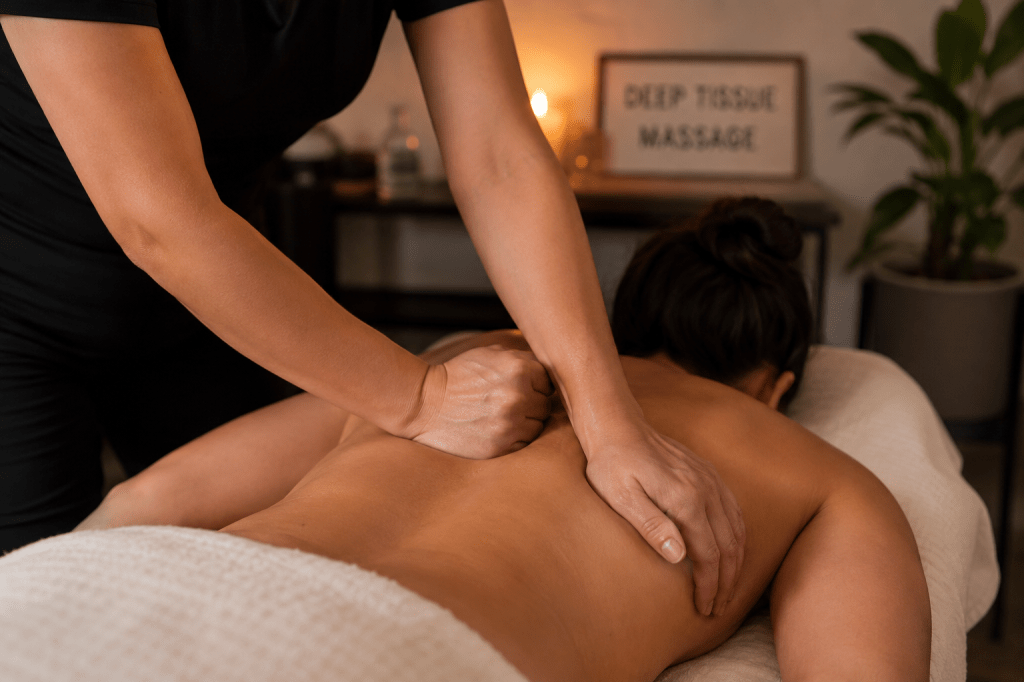
Deep tissue massage is a therapeutic approach that focuses on areas of muscular tension and restriction. The goal isn’t to see how much pressure you can tolerate—it’s to work thoughtfully with the muscles and surrounding soft tissues to help improve mobility, decrease tension, and promote relaxation.
What Is Deep Tissue Massage?
Deep tissue massage uses slower, intentional techniques to work with deeper layers of muscle and connective tissue.
Depending on your needs, a session may include a combination of sustained pressure, compression, stretching, myofascial techniques, and focused work on areas where you’re experiencing tension.
Every body is different, which means every deep tissue session should be different too.
Deep Tissue Doesn’t Have to Hurt
One of the biggest misconceptions about deep tissue massage is that more pressure automatically means a better massage.
It doesn’t.
Your body can actually tighten or guard when pressure becomes overwhelming. That’s why communication between you and your massage therapist is so important.
I want you to tell me when something feels like productive pressure—and when it’s simply too much.
You should never feel as though you have to “tough it out” during your massage.
Who May Enjoy Deep Tissue Massage?
Deep tissue work may be a good option for people experiencing:
- Muscle tightness from work or everyday activities
- Tension through the shoulders, neck, or back
- Tightness associated with repetitive movements
- General stiffness
- Muscle fatigue after physical activity
- Areas that feel like they need more focused attention
You also don’t have to choose between therapeutic and relaxing.
I often believe the best massage incorporates both. We can spend additional time addressing the areas that need attention while still creating a session that allows your nervous system to settle and your body to relax.
What Should You Expect Afterward?
Everyone responds differently to massage. You may leave feeling relaxed, lighter, or more comfortable in your movement.
Some people may also experience temporary tenderness following focused massage work.
Drinking water normally, allowing your body time to rest, and paying attention to how you feel afterward can all be helpful.
Your Massage Should Be About Your Body
One of the most important things I want my clients to understand is this:
You are allowed to speak up during your massage.
Want more pressure? Tell me.
Want less pressure? Tell me.
Is there an area you’d like me to spend more time on—or somewhere you don’t want worked at all? Let me know.
Massage therapy is collaborative. Your comfort, boundaries, and goals matter throughout the entire session.
At Lumina Bridge Wellness, my approach to deep tissue massage is intentional and individualized. The goal isn’t simply to “go deeper.” It’s to provide thoughtful therapeutic work based on what your body needs.
Ready to give your body some attention?
Schedule your next massage and experience deep tissue therapy tailored to you.
— Bridgette Gonzales, LMT
Lumina Bridge Wellness


Leave a Reply